

UK Settlement Reform 2026: Will ILR Take Longer or Faster for You?
Explore proposed UK settlement reforms, including 10-year ILR routes, faster pathways for high earners and potential impacts on migrants and employers.

Thal Vasishta
 4 min read
What is Changing Under the UK Settlement Reforms?
The 2025 immigration White Paper proposes moving away from the current five-year route to settlement for many migrants, replacing it with a more flexible “earned settlement” model.
Key proposed changes include:
-
A longer default qualifying period
-
Stricter minimum eligibility requirements
-
Variable settlement timelines based on individual circumstances
-
Potentially much longer waits for some migrants
The direction of travel is towards a more conditional and complex route to ILR.
The Proposed 10-Year Settlement Route
Under current rules, many work-route migrants qualify for Indefinite Leave to Remain (ILR) after five years.
The proposed reforms introduce a 10-year baseline qualifying period for many immigration routes.
However, this is not fixed. The consultation suggests a points-style system that adjusts the qualifying period up or down depending on factors such as:
- Salary level
- Occupation and skill level
- Community contribution, including volunteering
- Use of public funds
- Immigration compliance history (Unlawful entry)
Before applying for a Student Visa, you must first secure a place on a course with a licensed Student Sponsor.
Faster Routes to Settlement Under the Proposed System
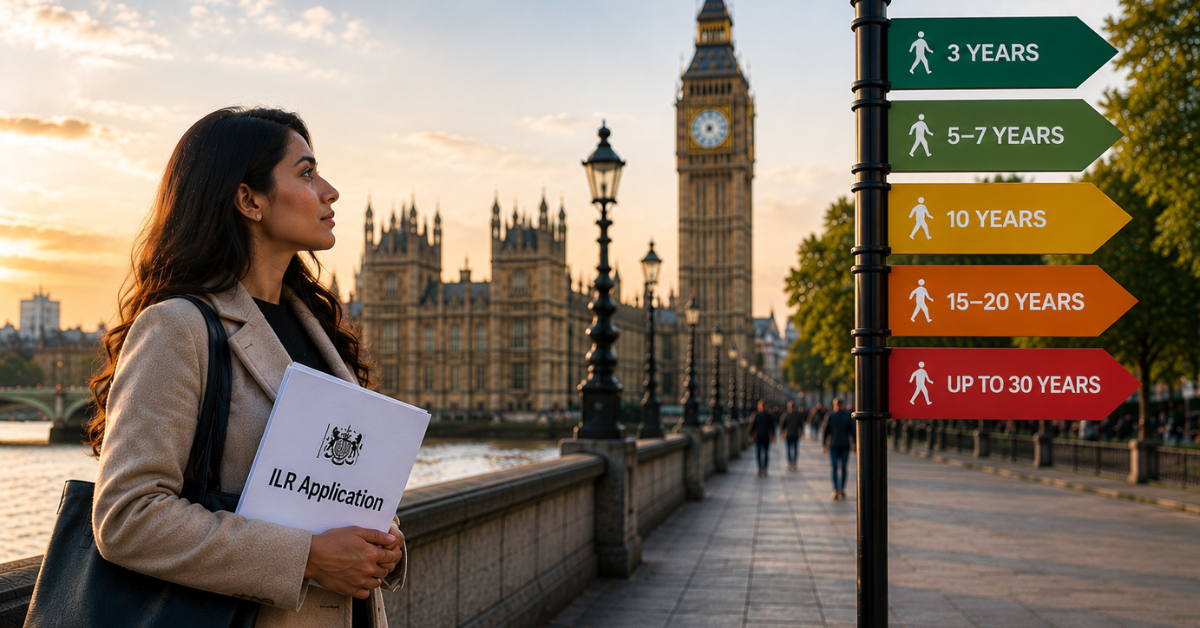
Some individuals may qualify faster than ten years, and in some cases even faster than the current five-year standard.
3-Year Settlement Route (7-Year Reduction)
Applicants earning over £125,140 may qualify for settlement after just three years.
5-Year Settlement Route (5-Year Reduction)
A five-year pathway may remain available for:
- Higher skilled workers earning above £50,270
- Public sector healthcare workers
- Certain teaching professionals
- Partners on family routes sponsored by British citizens
- Hong Kong BN(O) visa holders
5 to 7-Year Settlement Route (3-5 Year Reduction)
Individuals undertaking recognised community volunteering may reduce their qualifying period by three to five years, resulting in settlement after five to seven years.
Who Could Face Longer Settlement Timelines?
The new system also proposes extensions to the qualifying period in certain circumstances.
Examples:
- Claiming public funds: adds 5 to 10 years
- Entering the UK unlawfully: adds up to 20 years
For some groups, the baseline is already higher. Higher baseline groups:
- Lower-skilled and medium-skilled workers (including social care workers) would start from a 15-year baseline
- Refugees may face a 20-year baseline, with reductions only if they work or study
Overall range:
Settlement timelines could range from 3 years to as long as 30 years, depending on the individual, as well as reductions and penalties combined.
New ILR Eligibility Requirements
Alongside residence requirements, the Government proposes tougher eligibility criteria.
Criminality
Applicants may be required to have no criminal convictions at all, a stricter standard than current rules.
Income Requirements
Applicants may need to show earnings of at least £12,570 annually for a period of three to five years.
Exemptions may apply in cases such as:
- Maternity leave
- Long-term illness
- Disability
Minimum earnings of £12,570 over three to five years, with limited exemptions.
English Language Requirement
A B2 level requirement (up from B1), expected from March 2027.
Impact of Settlement Reforms on Dependants
Dependants may need to qualify for settlement independently, rather than automatically settling with the main applicant.
This creates uncertainty for:
- Non-working partners
- Stay-at-home parents
- Adult children
- Families with mixed immigration histories
It is also unclear how the rules would apply to children who turn 18 before their parents qualify.
Will the New Settlement Rules Apply to People Already in the UK?
The consultation states that the government intends to apply the new rules to individuals already in the UK who have not yet obtained ILR.
This means people expecting to qualify soon under the five-year route could instead fall under the new system.
Confirmed protection:
The only confirmed transitional protections apply to certain refugees granted protection before 1 March 2026.
If you are unsure how these proposed changes could affect your route to settlement, taking early advice can help you assess your options under both the current and potential future rules.

What the UK Settlement Reforms Mean for Employers
Employers sponsoring overseas workers should prepare for:
- Longer timelines before workers become settled
- Increased visa renewal costs
- Potential retention challenges
- Need to update recruitment materials
- Greater employee anxiety and uncertainty
Forward planning and internal communication will be key.
What Should Visa Holders Do Now?
No immediate action is required, but migrants should:
- Monitor developments closely
- Check when they may qualify under current rules
- Consider whether early ILR applications are possible
- Maintain continuous lawful residence
- Prepare for the B2 English requirement
Those approaching settlement eligibility, or planning long-term immigration routes, may benefit from early legal advice to understand the timing and strategy that best protects their position.
What Happens Next?
The consultation closed in February 2026, receiving over 200,000 responses.
Ministers have repeatedly stated that final proposals will be enacted later this year, with implementation expected to begin in autumn 2026.
However, implementation may be phased, some changes, such as the B2 English requirement, were written into the rules a year before taking effect.
Frequently Asked Questions
When will the UK settlement reforms take effect?
The reforms are expected to be finalised later in 2026, with implementation likely beginning in autumn 2026. However, phased changes are possible, and some measures may take effect later
Will ILR take 10 years under the new rules?
For many migrants, the proposed baseline is 10 years. However, this is not fixed, and individual circumstances may shorten or extend the timeline.
Can high earners qualify for settlement in 3 years?
Yes, proposals indicate that individuals earning over £125,140 may qualify for settlement after three years, representing the fastest route currently proposed.
Will dependants still qualify automatically for ILR?
Potentially not. Under the proposals, dependants may need to qualify independently rather than settling alongside the main applicant.
Will the new rules affect people already living in the UK?
Potentially, yes. The Government has indicated that the new system may apply to those who have not yet obtained ILR.
What is the new English requirement for ILR?
A higher English language requirement of B2 is expected to apply to some applicants from March 2027.
What is the ‘Restoring Control over the Immigration System’ White Paper?
It is the UK Government’s 2025 policy document outlining proposed reforms to the immigration system, including changes to settlement (ILR) routes, eligibility requirements, and qualifying periods.
Conclusion
While the final details are yet to be confirmed, the direction of travel is clear.
The UK settlement system is moving towards longer, more conditional, and more complex routes.
With qualifying periods potentially ranging from three to 30 years, and dependants no longer guaranteed to settle alongside the main applicant, the UK’s settlement landscape is set for its most significant transformation in decades.
Migrants and employers should prepare now for substantial change.
How Paragon Law Can Help

The proposed settlement reforms introduce significant uncertainty for both migrants and employers. With potential changes to qualifying periods, eligibility requirements, and dependant rules, long-term immigration planning is becoming increasingly complex.
Paragon Law’s immigration team is already supporting individuals and organisations in navigating these developments and preparing for what comes next.
We can assist with:
- Settlement (ILR) eligibility assessments under current and proposed rules
- Strategic advice on timing ILR applications
- Complex dependant and family settlement planning
- Skilled Worker and sponsor licence compliance advice
- Immigration support for employers managing workforce planning and retention
- Ongoing guidance as reforms are clarified and implemented
Early advice can help you make informed decisions and avoid unnecessary disruption as the new system takes shape.
🛑 The law applicable in this article is correct as of 21 June 2026. Immigration rules frequently change, and the information here may not reflect the latest legal position. For advice tailored to your specific circumstances, please contact us to arrange a consultation with our legal team.
Subscribe for updates


UK Immigration White Paper 2025 – Part 3: Implications of the Proposed 10-Year Settlement Rule for Employers and Visa Holders
 3 min read

Temporary Shortage List Update: 28 Occupations Recommended by MAC
8 min read

Parent Visa UK: Eligibility, Requirements and Settlement Guide
10 min read

UK Graduate Visa 2026: Eligibility, Costs, Application Process and 2027 Changes
10 min read

International Students in UK Higher Education: Key Trends and Policy Changes 2026
13 min read

British Citizenship Priority Service UK | Faster Decisions in 30 Working Days
11 min read

UK Visa Routes for Entrepreneurs and Skilled Individuals (UK Guide 2026)
17 min read
House of Lords Report Deals Major Blow to UK Settlement Reform Plans
6 min read
UK Settlement Reform 2026: Will ILR Take Longer or Faster for You?
8 min read

UK Student Visa 2026: Requirements, Costs and Work Rights
16 min read