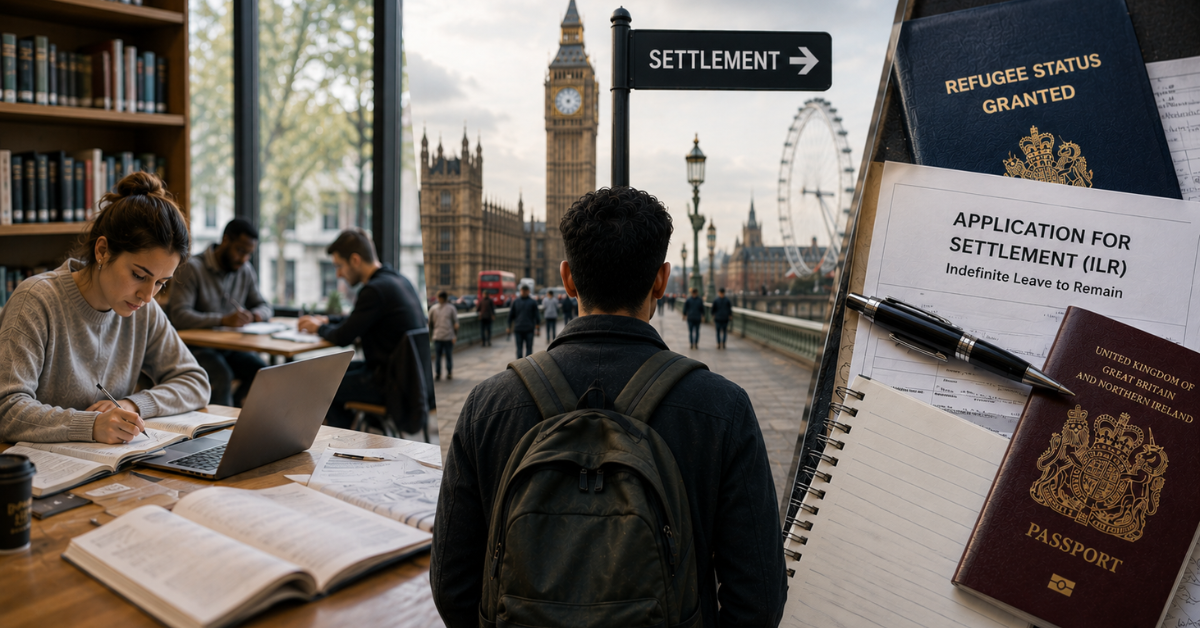
Person studying or working in the UK following proposed refugee settlement and protection route changes

Protection Work and Study Visa Route: Can Refugees Qualify for Earlier Settlement?

Could refugees qualify for settlement sooner under the UK’s proposed Protection Work and Study route? Learn how the new route may affect refugee settlement pathways.

white clock icon 3 min read

Refugees in the UK may soon be expected to work or study in order to secure faster settlement.

The UK government’s November 2025 policy paper, Restoring Order and Control: A Statement on the Government’s Asylum and Returns Policy, together with the March 2026 Statement of Changes (HC 1691), introduced more stringent rules in relation to protection and settlement.

As explored in our recent article authored by Rosie Evans, adults granted refugee status or humanitarian protection will now receive significantly shorter periods of leave, with no clear or guaranteed pathway to extension or settlement.

Alongside these changes, the government has proposed a new “Protection Work and Study” route, designed to encourage refugees to move away from long-term reliance on Core Protection status and towards employment or education-based pathways.

The route could provide a faster pathway to settlement for individuals able to demonstrate economic or educational contribution in the UK. 


What Is the Core Protection Route?

Under the government’s proposed reforms, individuals granted refugee status or humanitarian protection will fall within a new “Core Protection” framework. Under the proposed “Core Protection” model, individuals may only be able to renew their leave where they are still considered to be in need of protection.

This route is expected to:

  • Provide shorter grants of leave
  • Require ongoing renewal applications
  • Introduce greater scrutiny around settlement eligibility
  • Potentially extend the route to settlement to up to 20 years

Unlike the previous protection framework, refugee status may no longer lead automatically towards long-term settlement and stability in the UK.

The UK’s proposed 20-year settlement pathway for refugees would also place it among the most restrictive systems of comparable countries internationally.

At present, unaccompanied asylum-seeking children (UASC) will remain on the current five-year route to settlement, with the government stating that it is still considering the most appropriate long-term framework for this group. This protection is also expected to apply to individuals who turn 18 while their asylum claims are still being processed. 


What Is the Protection Work and Study Visa Route?

The government has indicated that it does not intend for individuals to remain on Core Protection long-term. Instead, refugees may be encouraged to integrate more fully into the communities providing them sanctuary and move away from the Core Protection route wherever possible.

One such way in which an individual may move away from the more restrictive Core Protection route to settlement is by transitioning into the Protection Work and Study visa route.

Under the proposals, individuals granted protection status may become eligible to switch into this route if they:

  • Secure qualifying employment
  • Begin study at an approved level in the UK

In doing so, they may become eligible to “earn” settlement earlier than they would under the Core Protection route alone. This could create a more tiered model of integration, reflecting the government’s wider move towards a contribution-based migration system, where settlement may increasingly depend on an individual’s overall contribution, integration and compliance within the UK.


Who May Qualify for Protection Work and Study Visa?

The government has not yet published full Immigration Rules for the Protection Work and Study route, and many operational details remain unclear.

However, current proposals suggest applicants would need to:

  • Hold existing refugee status or humanitarian protection
  • Secure qualifying employment or undertake approved study
  • Pay an application fee to switch into the route

The precise employment thresholds and specific details regarding the exact “level” of study have not yet been confirmed.

Unlike the Core Protection route, which is expected to remain fee-free for settlement applications, the Protection Work and Study route is expected to involve an application fee. This reflects the government’s intention to treat refugees more like “other legal migrants”, with fees potentially aligning more closely with those paid under work or study-based immigration routes.

It also remains unclear whether applicants switching to the Protection Work and Study route would need to pay the Immigration Health Surcharge or whether Legal Aid funding would be available for applications under this route.

Further guidance is expected throughout 2026 as the government continues developing the framework for the route.


What Are the Advantages of Switching to the Protection Work and Study Route?

One of the most notable advantages is the possibility of obtaining settlement earlier than would otherwise be possible under the Core Protection framework.

Under current proposals, individuals who remain solely on the Core Protection route may face a significantly extended qualifying period before becoming eligible for indefinite leave to remain.

By contrast, the Protection Work and Study route appears designed to reward economic and educational participation, potentially allowing individuals to “earn” settlement more quickly, depending on their circumstances and compliance with the route requirements.

A further advantage is the increased stability that may come from aligning immigration status with employment or study. For many, being able to demonstrate lawful residence based on ongoing work or study may provide greater clarity in planning for the future, particularly where long-term residence in the UK is desired.

It is important to note that these advantages remain contingent on the final design of the route.


What Remains Unclear?

Although the government has announced the direction of travel, significant uncertainty remains.

It is currently unclear:

  • How periods of residence under Core Protection will interact with time spent on the Protection Work and Study route
  • What level of work or study will qualify
  • How much the application fee will cost
  • Access to legal aid
  • What the settlement timeline will be for the Protection Work and Study route

The government is expected to release more detailed operational guidance over the course of 2026. Until then, individuals considering future settlement planning should approach any potential switch cautiously and seek specialist advice before taking action.


Conclusion

The proposed Protection Work and Study route signals a major shift in how refugee settlement may operate in the UK.

Rather than relying solely on long-term protection status, refugees may increasingly be expected to demonstrate economic or educational contribution in order to secure earlier settlement.

While the route could provide important opportunities for some individuals, significant uncertainty remains around eligibility, fees, qualifying periods, and long-term implications.

In this evolving legal landscape, obtaining specialist legal advice at the earliest opportunity will be essential to protecting lawful status and identifying the most appropriate pathway towards settlement in the UK.


How Paragon Law Can Help

Paragon Law can assist in providing expert advice in relation to the Protection Work and Study route and how it may interact with existing protection status. This includes advising on potential timing and strategic implications of switching route. Where appropriate, we can also assist in preparing applications with appropriate evidential rigour and procedural precision.

At Paragon Law, our specialist immigration team advises on all aspects of asylum and protection law, including the strategic implications of transitioning between immigration routes where permitted under the Immigration Rules.

Our team can assist with:

  • Initial asylum and protection applications (including appeals)
  • Human rights-based applications
  • Routes to permanent residence and settlement

As further details of the Protection Work and Study route emerge, we will continue to provide practical guidance and updates on how these changes may affect individuals already living in the UK under protection status.

If you require specialist immigration advice, please contact our team to arrange a consultation.


Contact Us


🛑 The law applicable in this article is correct as of 29 May 2026. Immigration rules frequently change, and the information here may not reflect the latest legal position. For advice tailored to your specific circumstances, please contact us to arrange a consultation with our legal team.

Share this article

Subscribe for updates

Question marks in bubbles-1

Got a question about the Electronic Travel Authorisation (ETA)?

If you would like to know more about the Electronic Travel Authorisation (ETA), then get in touch with us today to speak to an expert immigration lawyer.

Contact Us
Home Office Guidance on Asylum Seekers Volunteering in the UK

Home Office Guidance on Asylum Seekers Volunteering in the UK

Are asylum seekers allowed to volunteer in the UK? We explain Home Office policy, compliance risks, and practical HR steps to ensure volunteering does not amount to unauthorised work.
Clock icon 3 min read