Is Refugee Status Still Secure? UK Cuts Leave to 30 Months
UK refugee rules changed in March 2026. Learn how reduced protection leave and renewal rules affect settlement and long-term stay in the UK.

Rosie Evans
Refugee status in the UK is no longer a stable, long-term position.
The Home Office’s March 2026 Statement of Changes (HC 1691) introduces one of the most significant shifts in UK protection policy since the Nationality and Borders Act 2022.
Individuals granted refugee status or humanitarian protection will now receive significantly shorter periods of leave, with no clear or guaranteed pathway to extension or settlement.
The changes move the UK protection system away from long-term stability towards ongoing reassessment, where individuals may need to repeatedly justify their right to remain in the UK.
Reduction in Protection Leave: From 5 Years to 30 Months
Prior to 2 March 2026, individuals granted refugee status or humanitarian protection were typically given five years’ leave to remain, with a clear route to settlement.
Under the updated Immigration Rules:
- The standard grant of leave has been reduced to 30 months (2.5 years)
- This applies to both refugee status and humanitarian protection
- The change is reflected in amended paragraphs 339QAA and 339QBA of Part 11 of the Immigration Rules
- It applies to asylum claims made on or after 2 March 2026
Who is exempt?
The only individuals who will continue to receive five years’ leave are unaccompanied asylum-seeking children (UASC) who are under 18 at the time a decision is made.
However, this protection is limited:
- Applicants who turn 18 during the process will receive only 30 months’ leave
- Accompanied asylum-seeking children will generally be granted leave in line with their parents
This means that where a parent’s claim, or a child’s individual claim, is lodged on or after 2 March 2026, the child will generally be granted 30 months’ leave in line with the parent’s status. If the parent’s claim was lodged prior to 2 March 2026 but a separate claim for the child was lodged after this date, then the child would be granted 5 years permission to stay, in line with their parent’s leave.
This creates a more complex and, in many cases, less favourable position for families.
Renewable Protection: A System Without Clarity
At the end of the 30-month period, individuals may apply to extend their stay. However, the framework for doing so is unclear and introduces a new level of uncertainty.
No defined renewal criteria
The Immigration Rules do not set out clear conditions for extending protection status.
Current Home Office guidance indicates that:
- A longer grant of leave will only be issued in “the most exceptional circumstances”
- Caseworkers must identify situations that are “distinguished to a high degree from others who need international protection”
- Applicants must now demonstrate that they continue to require protection, rather than the Home Office needing to prove it is safe for applicants to return.
Crucially, this shifts the burden onto the applicant.
How do refugees extend their stay?
If an applicant would like to obtain a longer period of permission to stay, then they can either request this at the outset of their initial application or apply to renew their permission no earlier than 28 days before their leave is due to expire.
The Home Office has not issued a clear procedure for how refugees will renew their protection status. Given that the earliest date the Home Office could expect renewal applications to be made is 3rd September 2029, it is possible that a specified renewal route may be introduced in the future for those looking to extend their protection status. However, currently there is no separate extension route for refugees granted with the reduced period of protection leave.
Applicants must therefore rely on alternative applications such as:
- FLR (DL) – discretionary leave for individuals seeking to extend their stay outside the Immigration rules
- FLR (HRO) – extension of an individual’s current permission to stay based on human rights grounds
- In limited cases, FLR (FP) – applications based on private and family life
The maximum period of leave normally granted under these FLR applications is a further 30 months. Where applicants are granted the full period, they may only need to renew their protection status once before becoming eligible to apply for settlement. However, where shorter periods of leave are granted, multiple applications may be required before individuals reach the minimum period of stay to apply for indefinite leave to remain.
Importantly:
- Home Office guidance indicates that applications based on employment or education are highly unlikely to succeed
- Legal aid is not automatically available, although exceptional case funding may be possible
Strict timing and serious consequences
Applications can only be made within 28 days of leave expiring.
Failure to apply in time may result in:
- Loss of right to remain in the UK
- Being classed as an overstayer
- Exposure to detention and removal
It is important for all prospective applicants to seek legal advice before their protection status expires to ensure that their personal circumstances are properly considered when submitting their application.
Given the complexity and risks involved, early legal advice is essential.
Impact on Settlement (Indefinite Leave to Remain)
The reduction in leave also has significant implications for settlement.
Current requirement
Currently, individuals granted Refugee Status or Humanitarian Protection status may apply for Indefinite Leave to Remain (ILR) under the Settlement Protection route.
To qualify:
- Applicants must complete five years of continuous residence in the UK
- Applications can be submitted 28 days before expiry of protection leave
What has changed
With leave granted in 30-month periods:
- Individuals will need to successfully extend their status at least once
- In some cases, multiple extension applications may be required
Introduction of the 'safe return review'
The updated Rules now formally require decision-makers to conduct a ‘safe return review’ when assessing settlement protection applications. While this assessment has historically been carried out in practice, it had not been consolidated into the Immigration Rules until now.
This means:
- The Home Office will assess whether it is now safe for the applicant to return to their home country
- Changes in country conditions or personal circumstances may result in refusal
Even after several years in the UK, settlement is no longer assured.
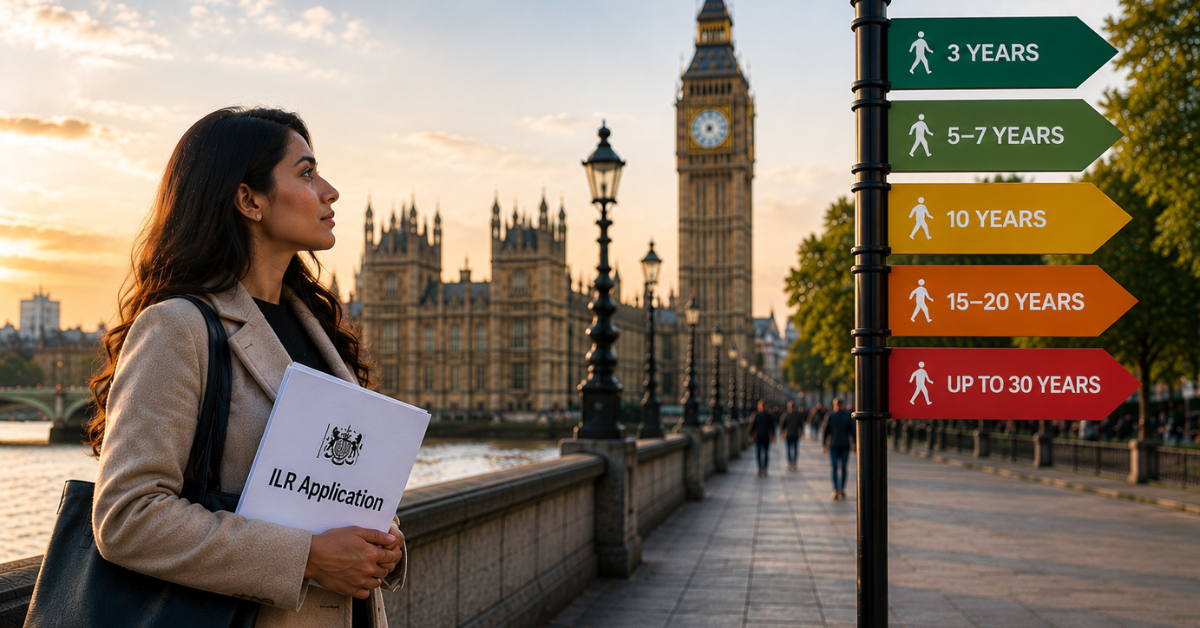
Looking Ahead: A Potential 20-Year Route to Settlement
These changes align with proposals set out in the Home Office’s November 2025 consultation, A Fairer Pathway to Settlement.
The consultation outlines proposals by the UK government to significantly reform the pathway to settlement for migrants, including those granted protection status. While these proposals are not yet law, they clearly signal a move towards a more restrictive and conditional system.
For individuals with refugee status, the government has indicated that it may:
- Increase the qualifying period for settlement to up to 20 years
- Introduce reduced pathways for those who arrive on, or switch to, new core protection work and study routes
If implemented alongside the reduced 30-month period of leave, individuals may need to make at least eight separate protection renewal applications before becoming eligible for ILR.
This assumes that applicants are granted a further 30 months’ leave each time they renew their status. Where shorter periods are granted, even more applications may be required. For UASCs granted five years’ leave, another seven applications may still be necessary before becoming eligible for ILR.
Currently, settlement protection applications do not attract an application fee and remain within scope for legal aid. Although the consultation paper does not propose introducing application fees at this stage, this remains a possibility in future reforms.
Conclusion
The changes introduced under HC 1691 fundamentally reshape the UK’s protection framework.
Refugee status and humanitarian protection no longer provide the long-term stability they once did. Instead, individuals face shorter periods of leave, unclear renewal pathways, and increased scrutiny when seeking to remain in the UK.
In this evolving legal landscape, obtaining specialist legal advice at the earliest opportunity will be essential to protecting lawful status and securing the strongest possible pathway towards long-term residence in the UK.
How Paragon Law Can Help

At Paragon Law, our specialist immigration team advises on all aspects of protection and asylum law, including:
- Initial asylum and protection applications
- Extension and renewal strategies
- Human rights-based applications
- Settlement planning and long-term immigration pathways
We provide tailored, strategic advice to help individuals navigate an increasingly complex system with confidence.
🛑 The law applicable in this article is correct as of 7 May 2026. Immigration rules frequently change, and the information here may not reflect the latest legal position. For advice tailored to your specific circumstances, please contact us to arrange a consultation with our legal team.
Subscribe for updates
Home Office Guidance on Asylum Seekers Volunteering in the UK
Not ready to talk? Our free immigration resources may have the answer to your questions
Is Refugee Status Still Secure? UK Cuts Leave to 30 Months
Innovator Founder Visa UK: Requirements, Costs and ILR Guide
Sponsor Licence Compliance Changes 2026: What HR Must Do
Wireless Festival Cancelled After Ye’s ETA Refusal: Lessons for Businesses
UK Immigration Rules Update: Key Changes Affecting Families
UK Asylum Protection Changes: Reduced to 30 Months from March 2026
Expanded Illegal Working Liability Under the Border Security, Asylum and Immigration Act 2025
Home Office Guidance on Asylum Seekers Volunteering in the UK